Keep up with the updates:
AdventureDoor • Reviews • Hi-Res Adventure #0: Mission Asteroid
Hi-Res Adventure #0: Mission Asteroid
| Developer: | On-Line Systems |
|
| Released: | 1980.12 | |
| Genre: | Sci-Fi | |
| Graphics: | Pixel art / 2D | |
| Perspective: | First person | |
| Gameplay: | Parser |
 |
Note: this game can be played with ScummVM software. |
 |
Note: this is an Apple II game. |
| The game is also available for Atari 8-bit, Commodore 64, FM-7, PC-88, and PC-98. |
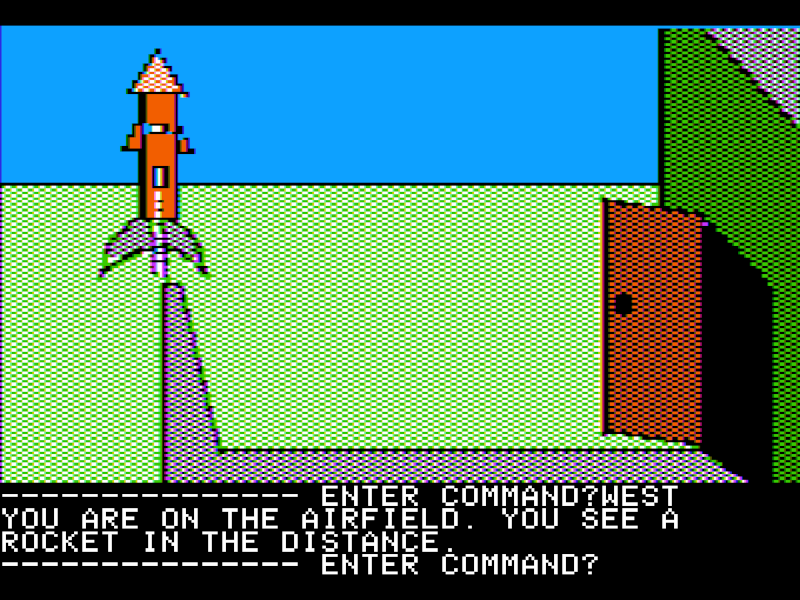
O-oh. It's a very bad situation. A massive asteroid is on a collision course with the Earth. And obviously it's a situation similar to the Cretaceous–Paleogene extinction event, which wiped out dinosaurs from the entire planet. (Let's not go deeper into alternative theories about that, such as volcanism or epidemic diseases; this time it's the asteroid impact that matters.) This is where the player steps into the astronaut's shoes and tries to save the day, and the entire planet, as the protagonist of the game.
When creating something new, the first time is innovation, the second time is repetition, and from the third time on it's routine. The first Hi-Res adventure, Mystery House, has the reputation of being the first ever adventure game with graphics. The second Hi-Res adventure game, Wizard and the Princess, is allegedly the first ever adventure with colour graphics. This third (zeroth?) game in the series (with a confusing number) is not really the first of anything but tries to improve the already existing formula.
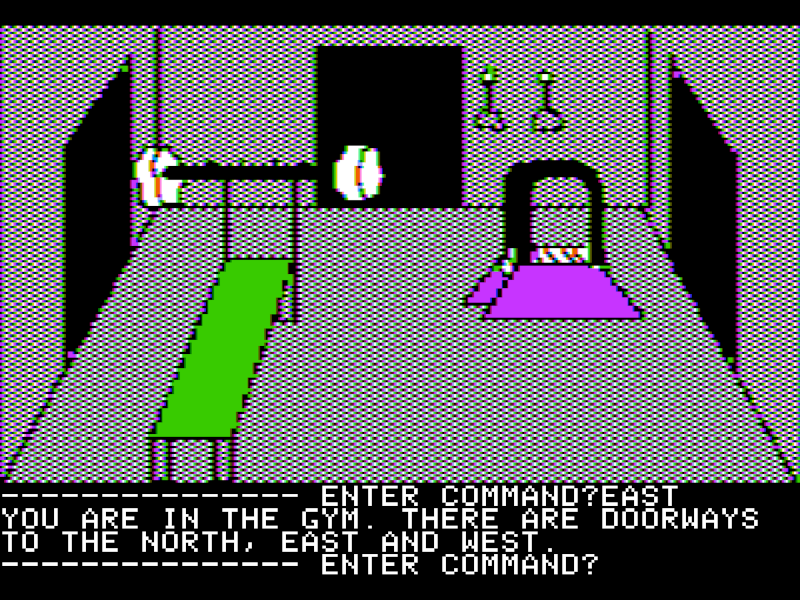
There are some clear improvements. The graphics are arguably better than in the previous game, and there is a more coherent structure in the game flow. Also, many completely random elements are not as big of an issue in this game as in the previous two games. These changes actually do work; Mission Asteroid is much more fun to play than the previous Hi-Res adventures.
Much of this is done on purpose. The manual says it very clearly: "This adventure is slightly easier and a little shorter than our other HI-RES ADVENTURE games." Something has not changed, the stated length of the game is still very much inflated: "This game should provide weeks of Adventure."
There's one very interesting thing in the game. It is clearly designed to be an easier, beginner-level experience, which is fine as such. But the game has a time limit! You can't take forever to save the planet Earth; the clock is ticking five minutes every time the player hits enter to give a new parser command. That's a big problem if the goal is to be beginner-friendly! The time limit makes many things actually harder than the relatively free exploration in the previous games. In addition to that, there are dead ends in the game, so a newbie player can be in a no-win situation until the game is over because the time runs out. That's not necessarily the best introduction to adventure games, but admittedly it could be worse with completely random incidents, which are not really part of this game.
Speaking of the time limit, it's very tight. The goal is to launch, fly to the asteroid, destroy it, and safely return to Earth within a limited number of minutes, or parser commands. The game begins 12:00, and the asteroid is going to hit the Earth at 19:15, so the player has only 7 hours and 15 minutes to complete the mission. And every time the player even takes a look at the watch, another five minutes have been wasted. One could assume that any planet-saving rescue mission would have a bigger time window, but supposedly this is enough.
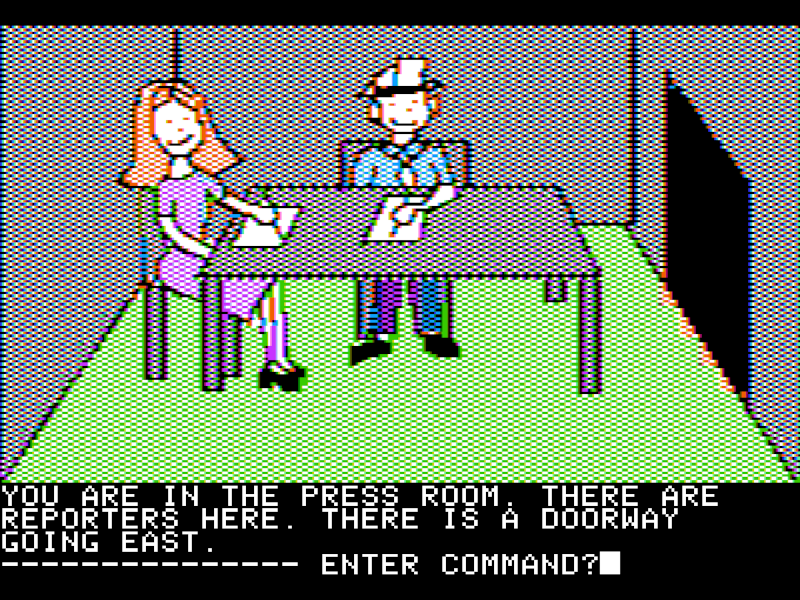
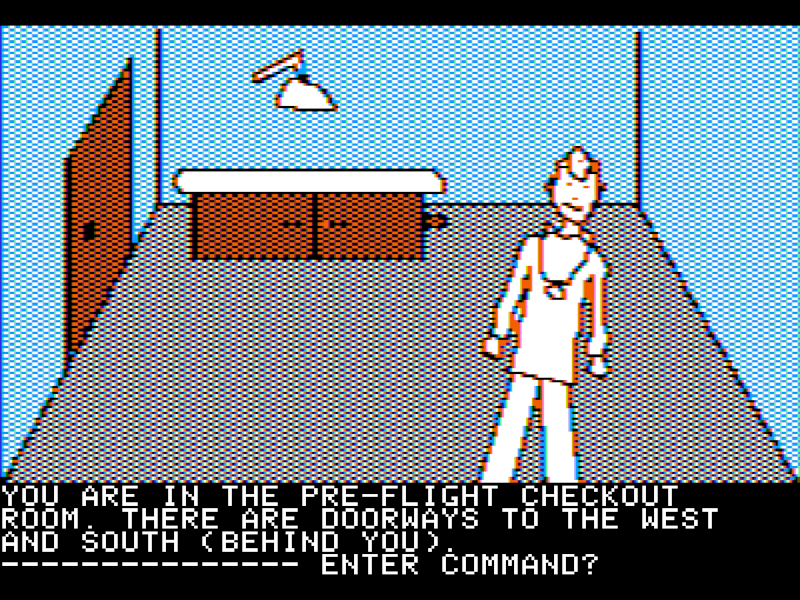
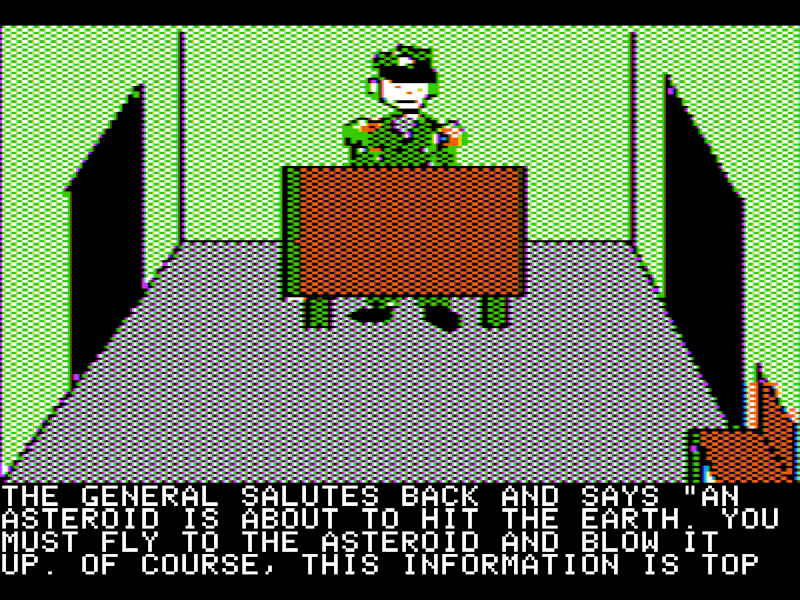
Speaking of realism overall, the planet doesn't want to be saved, it seems. In order to save the planet, the player first has to get past a secretary who only lets in by knowing the correct password, then military protocol must be followed or the protagonist will be kicked out of service, and there's also a doctor who refuses to let the protagonist enter the rocket unless the player can convince him to let the player walk through the door that leads to the launch pad.
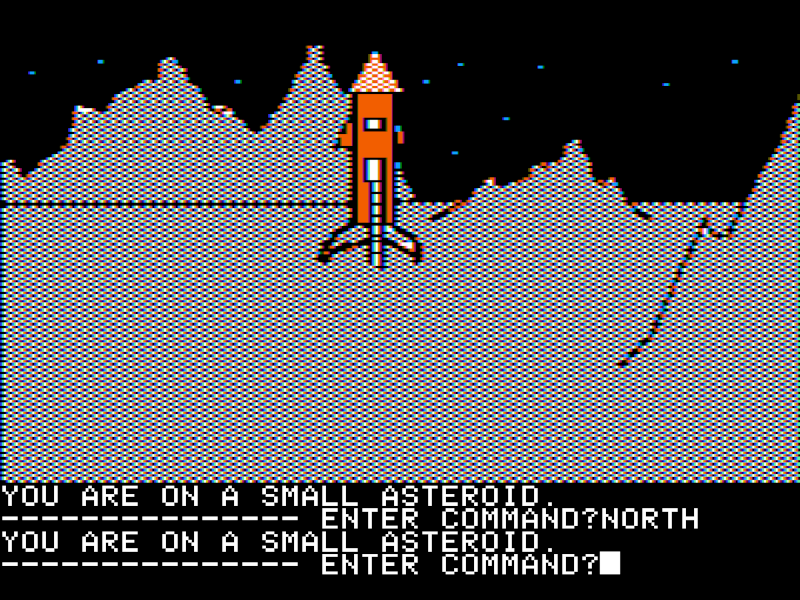
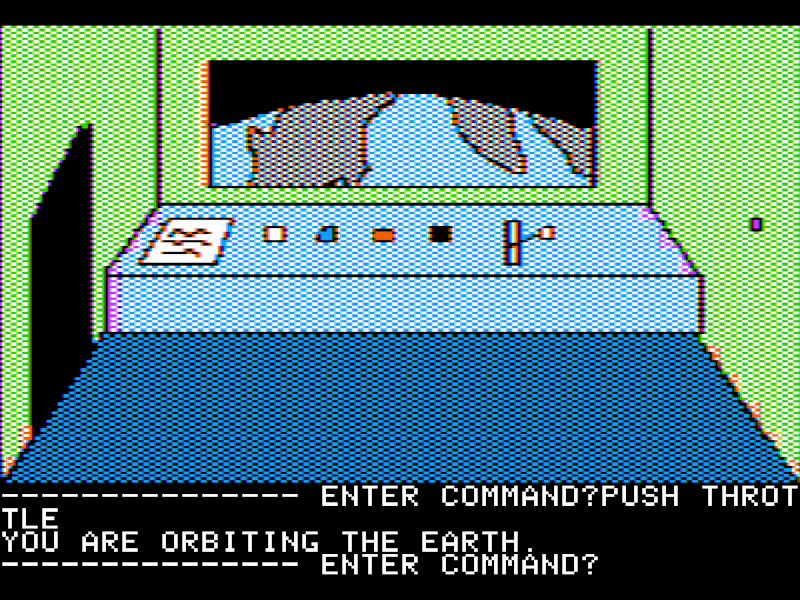
And then the protagonist has to know which direction to steer the rocket. And that means completely relative terms like left, right, up, and down which really mean nothing in outer space! To really tear that concept apart, flight instructions are given in minutes, and obviously in real life things like time dilation would mean that a minute on the planet and a minute in space do not completely match. So obviously the game doesn't have any hard science behind it, or much science at all, other than an asteroid hit being a real concern for life. But it's not about learning the smallest details of science, it's about playing an adventure. A more solid science would be a nice bonus, but that's something for some other time and some other game.
Most of the game is quite easy for an experienced adventurer. The only really hard thing is piloting the spaceship, because, well, it doesn't make any sense in real life, and it doesn't even make sense internally as a puzzle. Otherwise it's kind of obvious what needs to be done. Take items that take care of the asteroid, and then use them to really get rid of the asteroid. There are some things that can get the player killed, but they are mostly logical and can be expected to happen, such as running out of oxygen during the mission.
Is the game better than the more logically numbered predecessors in the series? Probably yes. The graphical style is much better, the plot does make sense in the bigger picture, there aren't too many annoying random elements, and the game is kind of fun to play. The biggest problem is the complete lack of realism, which doesn't present a problem in a fantasy setting but really feels distracting in a game that is basically rooted in a hard science concept, an asteroid hit. The game probably works as an entry point to the Hi-Res series, as it is designed to do, but otherwise it doesn't really feel that special. There's nothing really wrong with the game, but on the other hand, it isn't an especially rewarding experience. It's a graphical adventure game with a basic parser and with a thin plot. Maybe that's all that it needs to be.
Image gallery