Keep up with the updates:
AdventureDoor • Reviews • Secret Files: Tunguska
Secret Files: Tunguska
| Developer: | Animation Arts |
|
| Released: | 2006.09.04 | |
| Genre: | Mystery / Sci-Fi | |
| Graphics: | Realistic / 2.5D | |
| Perspective: | Third person | |
| Gameplay: | Point-and-Click |
Crash! Boom! Bang!
That was mostly what was heard in Siberia back in June 1908, when something exploded in Tunguska. And what a blast it was! It was many times more massive than the Hiroshima atomic bomb, to give a comparison point. Now, no one really knows for sure what happened there back then, but the destruction was massive, although real damages from the human perspective were relatively small, Siberia being a vast area of wilderness. Most likely it was caused by an asteroid/meteor/comet/you-name-it, one of those things, which have happened before and after as well.
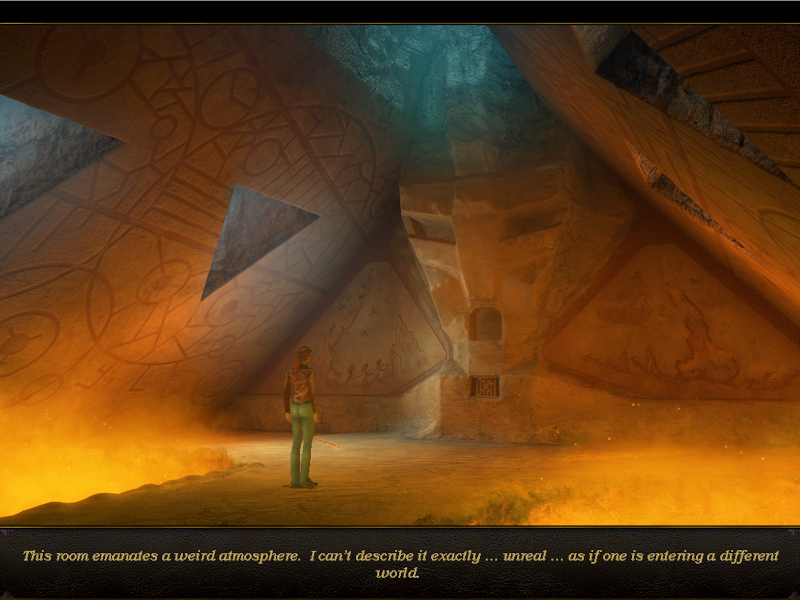
Obviously such an event is fertile ground for alternative theories, ranging from weird to even weirder, including experimental technologies, aliens, and everything, and this is where Secret Files: Tunguska, the game, fits in. Lots of made-up fiction spiced with a drop of reality, served in a classic point-and-click format. And who wouldn't be hungry for such an adventure?
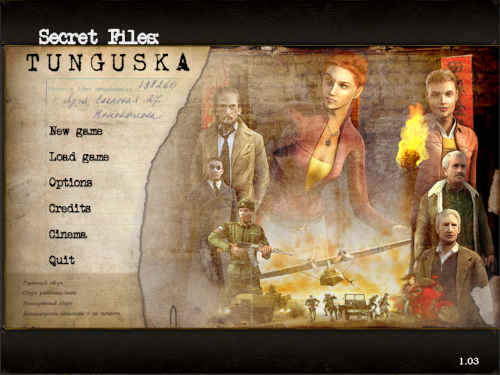
In the game, the player gets to play the part of Nina Kalenkov, (presumably) a German girl of Russian ancestry, living in Germany with her father. One day her father, who works at the museum, disappears unexpectedly, and Nina, the protagonist, tries to find out what exactly has happened. And very soon very weird events start to roll on, and Nina will be globetrotting, trying to learn about her father's whereabouts and his past. There will be times when the player also gets to be Max Gruber, Nina's (alleged) friend and her father's colleague.
Some parts of the game feel very familiar. There must have been times when all of us have been controlling a female protagonist on her quest to find a lost person in Syberia, pardon, Siberia. And what about those trips to foreign countries, even to the point of having the red marker line when travelling by air - that's some serious Indiana Jones influence there. Not to mention the combination of male+female protagonists searching for ancient artefacts, not necessarily Broken Sword this time, but other old stuff. So some parts of the game "borrow" heavily from genre classics, but nothing to worry about; the story is original enough that similarities to other games can be seen just as an excessive homage, not any attempt to rip off anything.
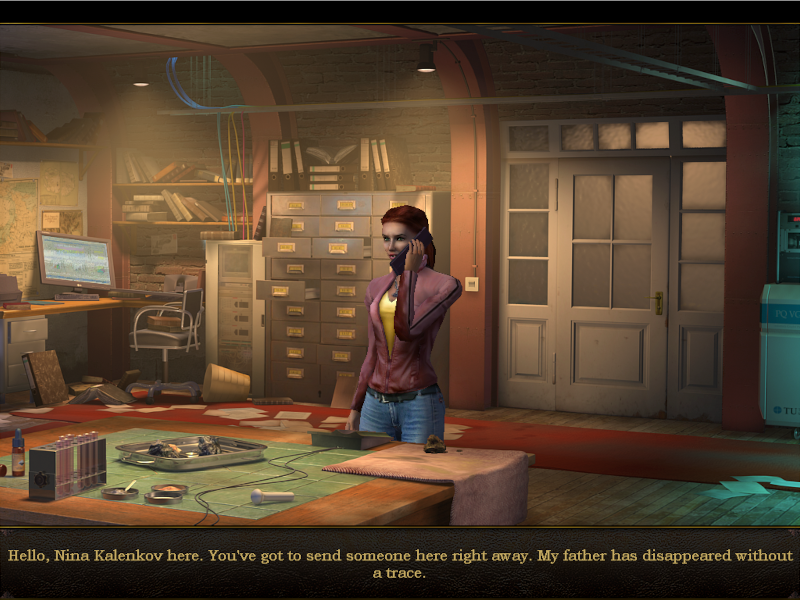
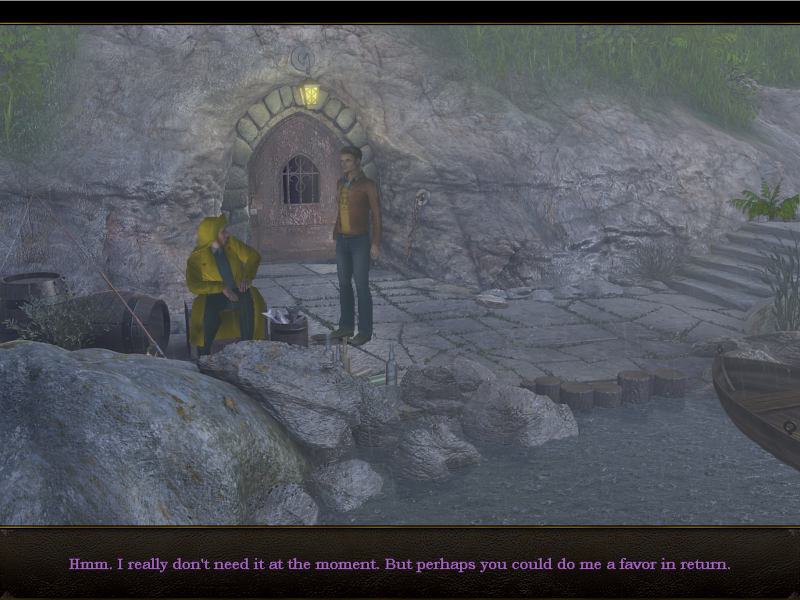
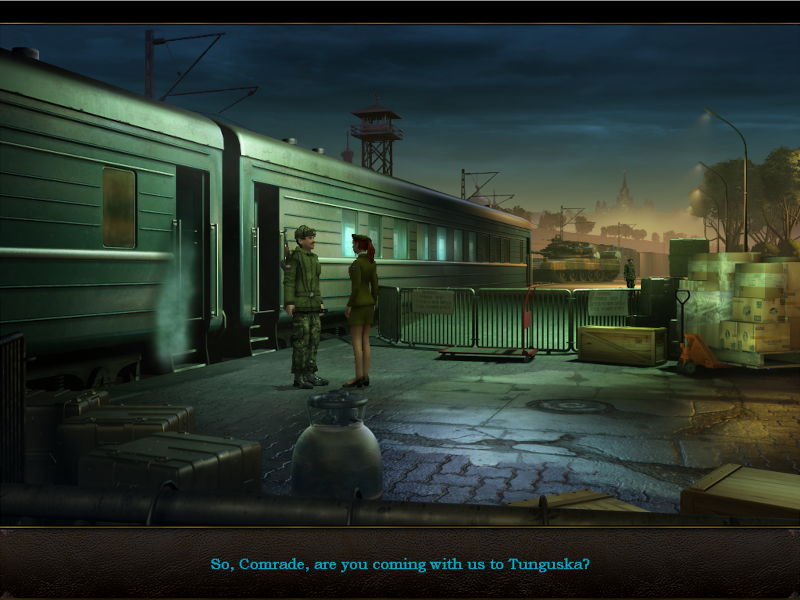
And the players will get their money's worth of adventuring for sure. There will be some things happening in Germany, and obviously there will be a trip to Russia with FSB agents causing problems there, and one of the protagonists gets to visit a Cuban mental institution, while the other gets to enjoy the bad weather and bad hospitality in an Irish pub, to give some description of many events that will follow when the story progresses. Quantity never means quality, but Secret Files: Tunguska is undoubtedly one of the longest adventure games ever made, so those looking to receive the maximum number of hours per money unit spent can't really go wrong with the game, even if there are even longer adventures out there.
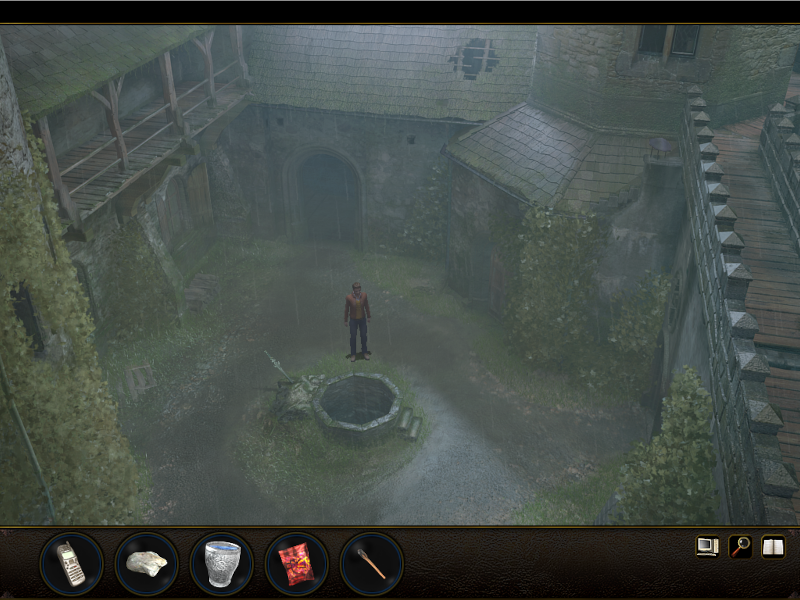
The game might actually even have benefitted from being a bit shorter. While there are about 80 unique backgrounds in the game and about 25 interactable characters in different locations, some parts of the game are almost annoyingly repetitive. For instance, it happens many times in the game that the protagonist is caught doing something and is locked in some place where she needs to escape from. Obviously the inventory gets reset to a few basic items every time, which is kind of OK, but completely unrealistically there will always be a couple of items remaining in the inventory that can be used to escape. It's a standard adventure game situation, but when it happens again, it feels a bit unimaginative, and from the third time forward, just repetitive. Perhaps a better solution might have been to include a third playable character with his/her own situations, but the developers have chosen another solution. It perhaps wouldn't be as bad if there was even a slightest bit of intelligence in the bad guys' actions. But no. Every time Nina is captured, they don't even bother to bind her, and leaving the protagonist able to move around in a room that has items like a metal pipe – who could think that she would attempt to use that to escape?
Some of that obviously falls into the category of adventure game moon logic that can be expected. Secret Files: Tunguska isn't really the worst game in that category, but what is a bit troublesome is that the player can never be sure whether the right solution is logical, or not-so-logical. Generally speaking, the beginning of the game is more logical but gets a bit more "lunar" the further it goes. Of course this is partially influenced by the plot that gets a bit out of hand in the end, but at least the developers are trying to build a grand finale. Anyway, if the protagonist has to get some water from the other side of town, it's not quite logical, not to mention that some puzzle solutions are simply wrong from the physics point of view. A handful of puzzles really do defy logic and laws of physics. But it's the charm of the genre, at least partially. Something that adventure gamers love, hate, love to hate, and hate to love.
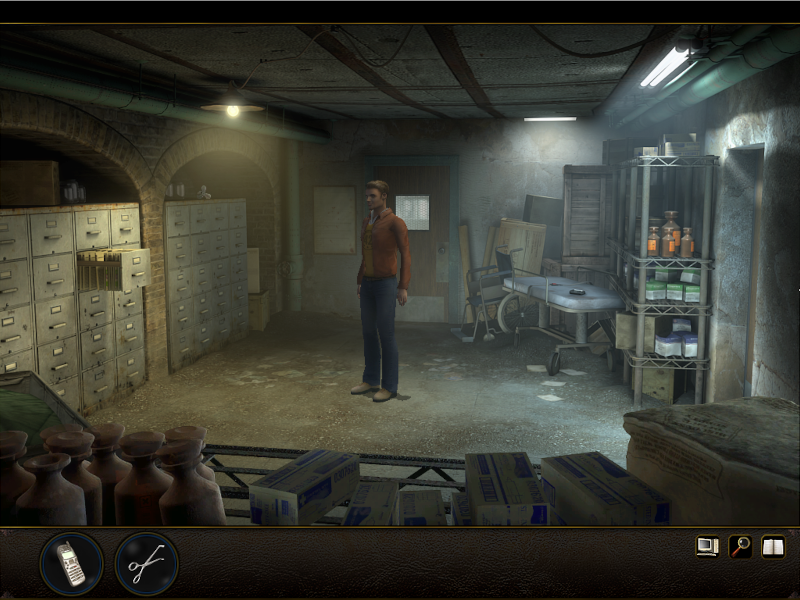
Character motivations, on the other hand, are a bigger problem. Obviously in the best and worst spirit of the genre, there are characters who are obsessed over mundane things like bread and jam but can't take those few steps to get those themselves. They rather keep sending the protagonist on random fetch quests. The usual thing. Problems with the protagonists are worse. Sometimes the protagonist refuses to do something but agrees to do a more twisted thing. To give an example, which is made up, so no spoilers here, the protagonist might refuse to spill soup on someone's clothes to get that person to leave, but would be completely fine with lying about that person's child being in a hospital injured. Adventures which don't try to prevent most logical actions based on some kind of protagonist moral values work better in that sense, as refusing to do something of lesser evil while doing the bigger evil makes the protagonist look like having a few loose screws in her own head.
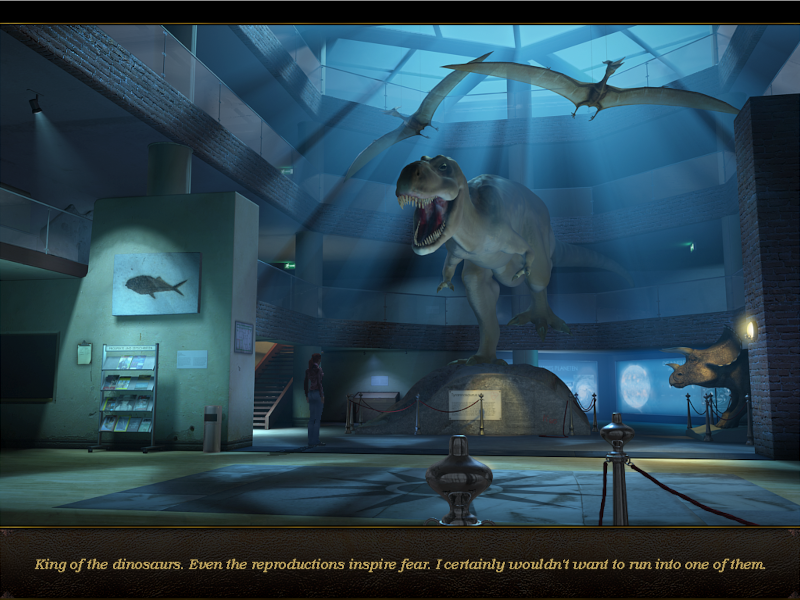
The same taste of twisted reality is found in some situations that the game presents. For instance, the museum seems to be closed during working hours but open at night. What kind of a museum operates like that? It's almost impossible to understand why the developers and story writers have chosen such an unrealistic way to do it, as in the end it doesn't make much difference story-wise but simply breaks immersion, as the game world doesn't feel so real. The most confusing thing is situations like one machine, where the left-click for use and right-click for looking give slightly different descriptions – one has the protagonist saying that she doesn't know everything that is needed to operate the machine, whereas the other has her saying that she knows absolutely nothing at all about it. In a real twist of events, that machine is not even needed to complete the game, so it raises some questions about whether something that was intended to be included in the game was at some point cut out from the final version.
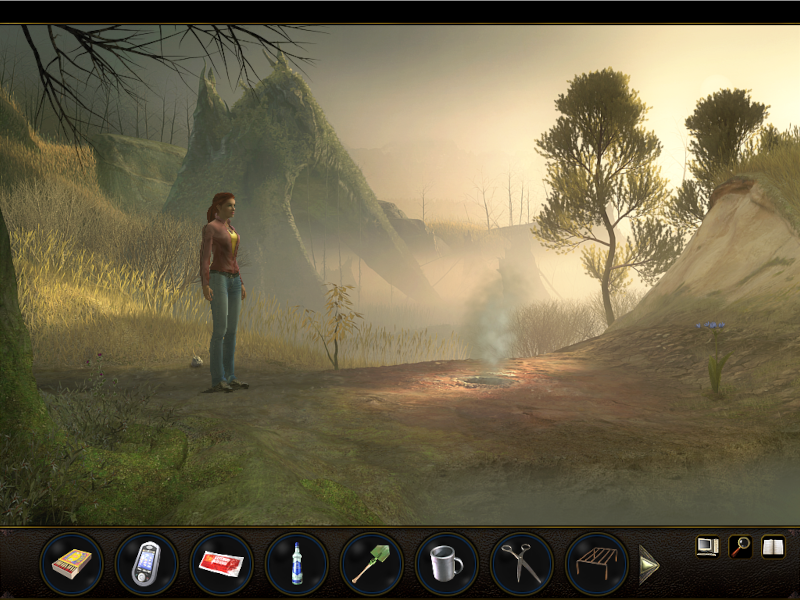
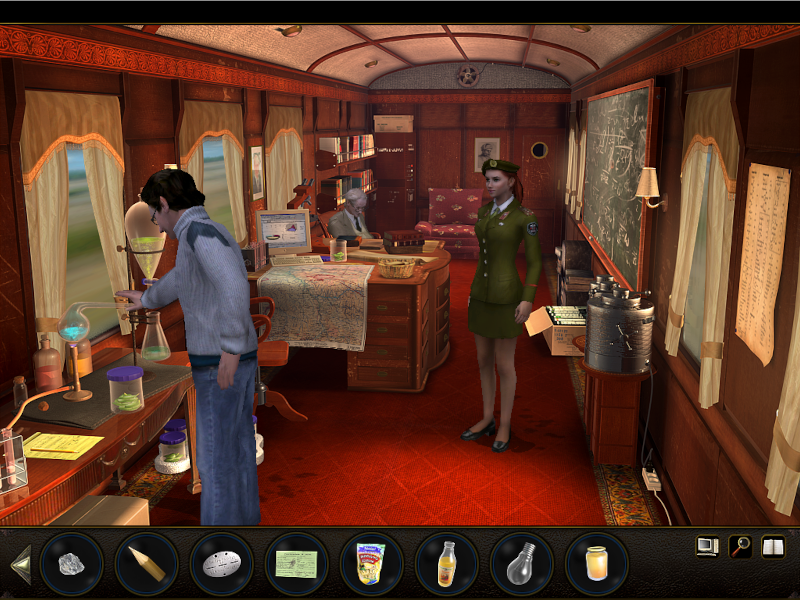
Speaking of interfacing the game, the control scheme is extremely user-friendly. There is a small mouse icon in the pointer, and when moving the cursor over a hotspot, the left and/or right mouse buttons will flash green if they can be used to perform an action or study something. This saves time, especially when trying to combine inventory objects, as simply moving the cursor over a row of inventory items shows whether there is any triggered response or not. Obviously that response can in some cases be a statement that the desired action is wrong or impossible. So gone are the good old days when the only way was desperately trying everything on everything when being stuck in an adventure game, and that's a good thing. Some hotspots can be a bit tricky to see and require some pixel hunting, but all hotspots can be made visible by hitting the magnifying glass icon, which shows a magnifying glass over interactable hotspots and arrows over room exits. Simply brilliant! There is also a notebook that records the main plot events and even has help available for some puzzles. These puzzles are what might be called puzzle puzzles, or perhaps casual puzzles, something that is more common in non-narrative puzzle games or casual hidden object type of games. Like how to operate some weird mechanism to open a safe. There is not so much, if any, help available for actual adventure puzzles, like making new objects from other inventory objects.
Considering how fantastically user-friendly the user interface is, it's actually surprising that some puzzles don't have any help at all. Especially in the end there are those illogical puzzle solutions, so trying everything on everything interactable is still the only way to discover the right solution in some cases. At least the described icon system saves from trying literally everything on everything. Fortunately there are no deaths or dead ends in the game, so even if the player gets stuck in some puzzle, the right solutions can be found without restarting the whole thing. "These are the rooms I am able to access, and these are the items I am carrying, so the solution must be using something on something else in some place." With that mindset, every puzzle should be solvable. The only minor problem is that in some cases only the right-click look action is available, which is in most cases used just for item descriptions, but in those few cases is actually the only way to pick up items. Whether that was something that got past the quality control, or is a deliberate attempt to increase challenge, can only be guessed.
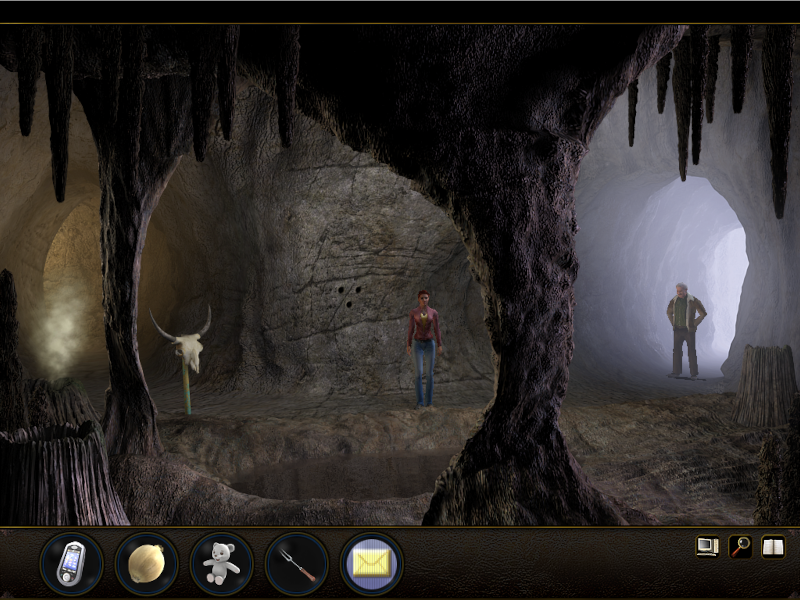
There actually are some real, albeit minor, issues with the game quality. Many of these are in the localisation and may not necessarily be a problem in the original German version (Geheimakte Tunguska). For example, some items have weird names, like "catapult" for slingshot. And some parts of the game audio are just bad. In the middle of some character speech, volume loudness can change, in some cases with an added unnatural echo, which indicates that the voice-over audio was pieced together from several recording sessions, and not entirely successfully. Fortunately most problems are with NPC characters, so it's not a constant problem that might follow the protagonist. What is a bit annoying is how different actors doing different roles have different ways to pronounce "Tunguska", which obviously can be a challenging word to get right, especially if there is no one to direct the right pronunciation. And of course all characters speak the same language throughout the game, regardless of whether the setting is in Central Europe, Asia, Antarctica, or some other place. An understandable compromise for playability – not necessarily anything wrong with that. Having these (presumably) German people talking with Russian people using imperial units instead of the metric system is, however, wrong. Completely understandable from the localisation point of view, but unrealistic, and therefore somewhat immersion-breaking.
Perhaps the biggest problem considering immersion is how the game tries to be many things all at once. Basically the game starts out as a mystery, but in the end there are lots of other elements in it, and everything doesn't mix perfectly together. Especially attempts at humour, which are a reminder why in some circles German adventure game humour is regarded as an infamous phenomenon. Sure, there can be some jokes here and there, if they work. Some of them actually do work quite well. For example, standing in one place doing nothing will provide audio gags, such as a car crash in the neighbourhood. Or a blooper reel with failed takes from the game characters (not voice actors, actual game characters). But when the game at one point has a long segment which is basically toilet humour (literally, as one fetch quest happens in a Russian toilet), it doesn't match the overall tone of the story, which is, or should be, a serious story about trying to find a missing family member and uncovering possible conspiracies related to it. There are also some attempts to break the fourth wall, even after the game is finished, when the game tells humouristically what happened to the game characters afterwards, and apparently one of the game characters became an adventure game developer who created Secret Files: Tunguska. Hah, hah?
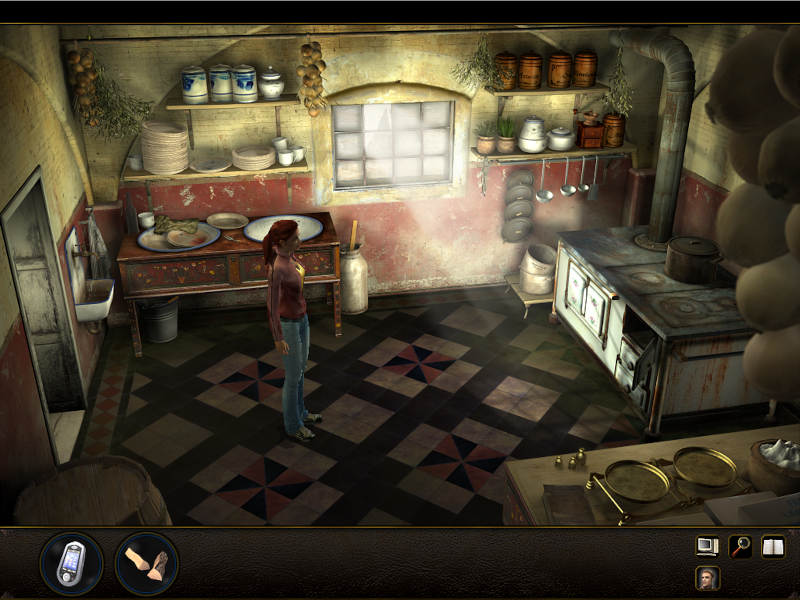
The flow of the narrative could be better too. While it basically works as well as can be expected, revealing a little bit of this and a little bit of that when the player goes further in the game, things don't come together as naturally as would be preferable. There is even some room for better character development; especially the second protagonist, Max, remains a bit undeveloped, which is obviously a design choice too, as the real motivations of different characters are kept unclear on purpose. Motivations for some of the bad guys remain completely unclear, though. Even after finishing the game, when thinking critically, it's impossible to understand why some characters acted the way they did, other than them being forced into the role of antagonists. So in some cases the basic statement for script writing, "who does what and why", forgets to implement the last question properly.
But in the end what is good in the game definitely outweighs its possible shortcomings in some areas. Obviously it's not the best adventure game ever made, but no one would dare to say it's a bad game, because it isn't. Overall it's quite good, in the category of 2006 releases it's even one of the best titles. For an experienced adventurer the difficulty of the game is most of the time almost perfect. Challenging, but not impossible to solve. The scope of the adventure is big - even if that brings some problems, it also means that there will be lots of puzzles to solve, mysteries to crack, and locked doors to open. And the end of the game even promises a sequel to follow. Even if the game is not as wunderbar as one might hope, it is still schön enough that it can be recommended as a quality adventure if the subject matter and overall game type are of any interest.
The best part of the game is that it really feels like a true adventure most of the time. Mysteries, missing people, natural disasters, strange phenomena, foreign cultures, native people, secret messages, fake identities and disguises, traditional puzzle solving and genre-specific disregard for other people's property. Isn't that what all good adventure games are made of? So is Secret Files: Tunguska, and while it might lack the final polish to push it into the big league of adventure games, it offers more than many other adventures combined. It even has some X-Files vibes to it, even disregarding its English title, which certainly adds to the impression. Overall, a very solid effort, and because of the game length and several twists and turns along the way, completing the game feels like actually achieving something. Maybe not having the explosive power of real-life Tunguska, but the game is certainly not a dud; it's loaded with good content.
I want to point-and-click, the solution is out there. (That's two X-Files references rolled into one high quality joke. Yes, you can laugh now. Also, the review opened with a brilliant Roxette reference in case you missed it.)
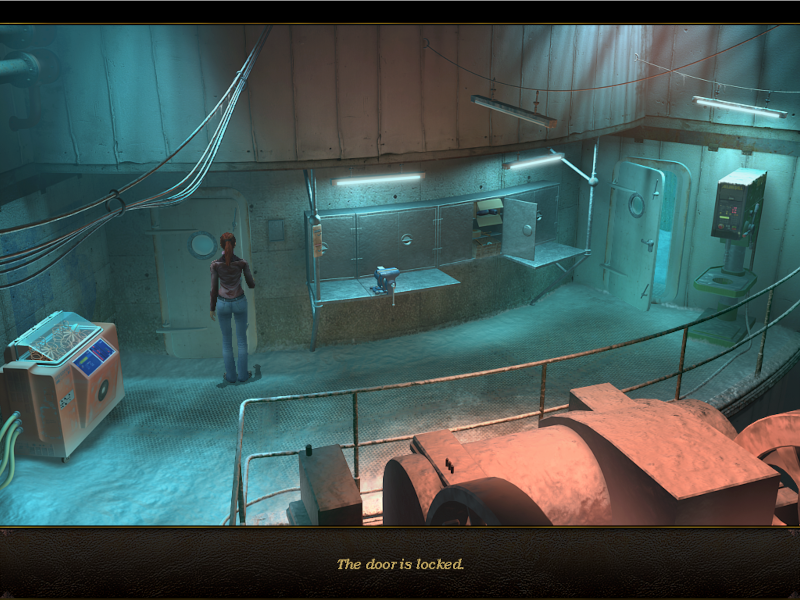
Image gallery